

 English
 日本語
 Español



Industry News

Home / Media Centre / Industry News / Can You Sleep on a Memory Foam Mattress Without Slats? Yes — Here's How to Do It
Product Category
NEW Category
Contact us
Can You Sleep on a Memory Foam Mattress Without Slats? Yes — Here's How to Do It
Can You Sleep on a Memory Foam Mattress Without Slats? Yes. Here’s How to Do It Right
Yes, you can — a memory foam mattress does not need wooden slats to support you well. What it does need is a flat, firm, breathable base. Slats provide elevation, airflow, and a continuous support plane. Remove them, and you simply need to replace those three.
We hear this question from consumers and retail buyers: “Can you sleep on a memory foam mattress without a slat base?” From a manufacturing view, the honest answer is that the foam itself does not care whether the surface below is timber, steel, or concrete. A high-density memory foam mattress on a clean, level floor often performs better than the same mattress on a warped frame.
The long-term condition of the mattress comes down to three details: a level base, full-footprint support, and a way for humidity to escape. WELLCARE’s standard memory foam mattresses use dense cores that tolerate firm surfaces well.
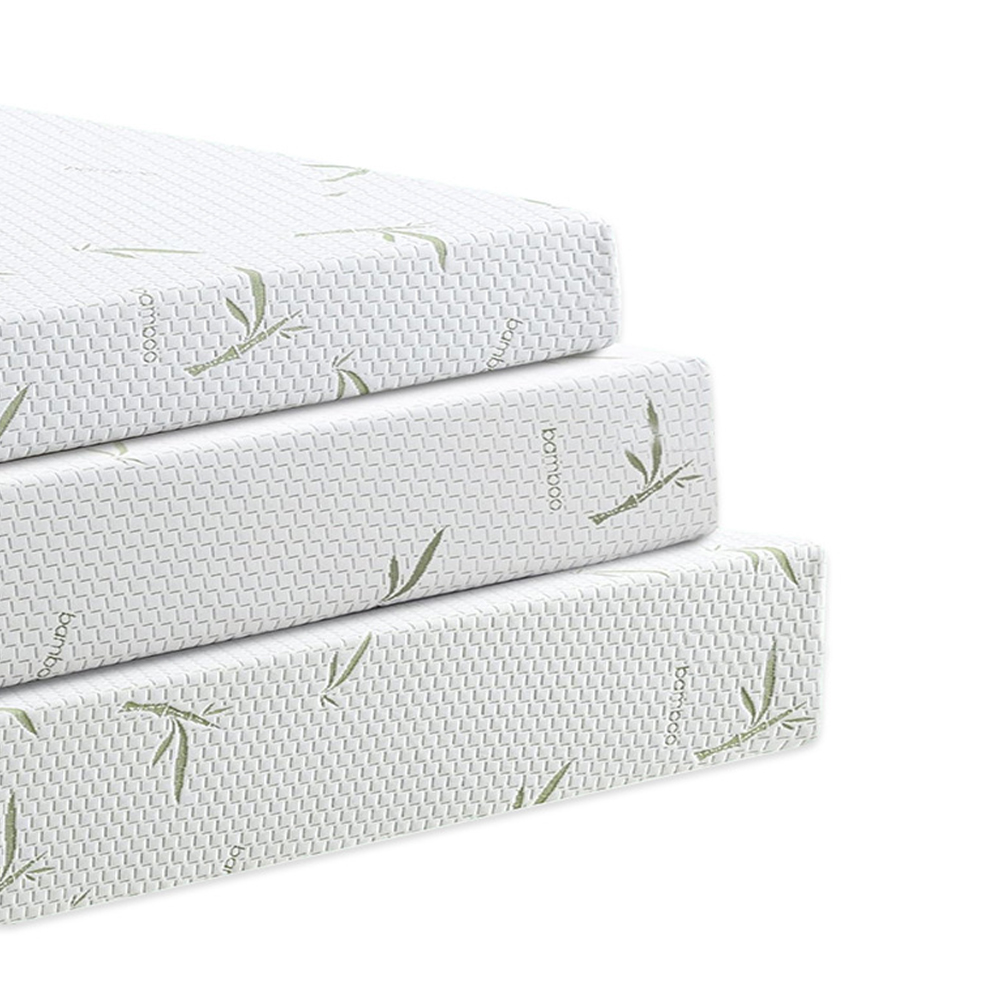 High-Density Memory Foam Mattress with Bamboo PrintStandard memory foam with dense core tolerates firm surfaces well. This model adds a bamboo leaf design and customizable sizing for long-lasting flatness.View Product →
Why Slats Exist — and What Happens Without Them
Slats are not part of a mattress’s comfort system; they are part of the bed frame. They lift the mattress off the floor, hold it level, and leave openings for air to pass underneath. None of this changes the feel of the foam. These functions determine how long the mattress stays fresh and flat.
A slat base performs three jobs:
- Elevation — keeps the mattress away from floor dust, drafts, and small insects.
- Even support — a correctly spaced slat deck forms one continuous plane from head to foot.
- Airflow — the gaps between slats let body heat and humidity escape through the base of the mattress.
Remove the slats and you need a surface that still delivers results. A platform bed covers elevation and support but less airflow. The floor covers support perfectly but, depending on the room, provides no airflow. Each just needs a compensating measure.
The real mechanical risk is not the hard surface — it is unevenness. A flat, continuous base gives the most uniform pressure distribution. Crossbars, a warped board, or a large central gap force the foam to deform only at contact points, creating the sag people mistake for a failed mattress.
If you already have a slatted frame, our guide to whether a memory foam mattress can go on a slatted base lists the gap limits manufacturers use.
Sleeping on the Floor: Stable, Simple, and Not Without Rules
Direct conclusion: yes, a memory foam mattress can be slept on directly on the floor, and for many people it is a genuinely good setup. The floor is level, does not flex, and supports the full footprint. It is also the easiest option for guest rooms, studios, or the first nights after a move.
The advantages are real. No gap is large enough for foam to push through, no old coil spring presses into the base, and the mattress stays still during the night. Floor sleepers often report the mattress feels firmer and more stable on the floor than on a slatted frame.
The disadvantages are about moisture and hygiene, not support. A mattress lying flat against the floor traps the humidity your body releases overnight. On a slatted bed the moisture disperses; on the floor, it accumulates in the lower foam layers and inside the cover, producing musty smells and faster fabric wear.
If you choose a floor setup, stand the mattress on its edge for a few hours every two weeks so the base can breathe. Use a washable, breathable pad underneath, and never use plastic.
From our material lab: the foam core tolerates a hard, flat surface extremely well. In our compression and humidity tests, the marks that remain come from point loads and trapped moisture — not from the absence of wooden slats.
WELLCARE R&D team
For regular floor sleeping, a thinner folding mat is often more practical than a full-size mattress, because it is easier to air, move, and store against a wall during the day.
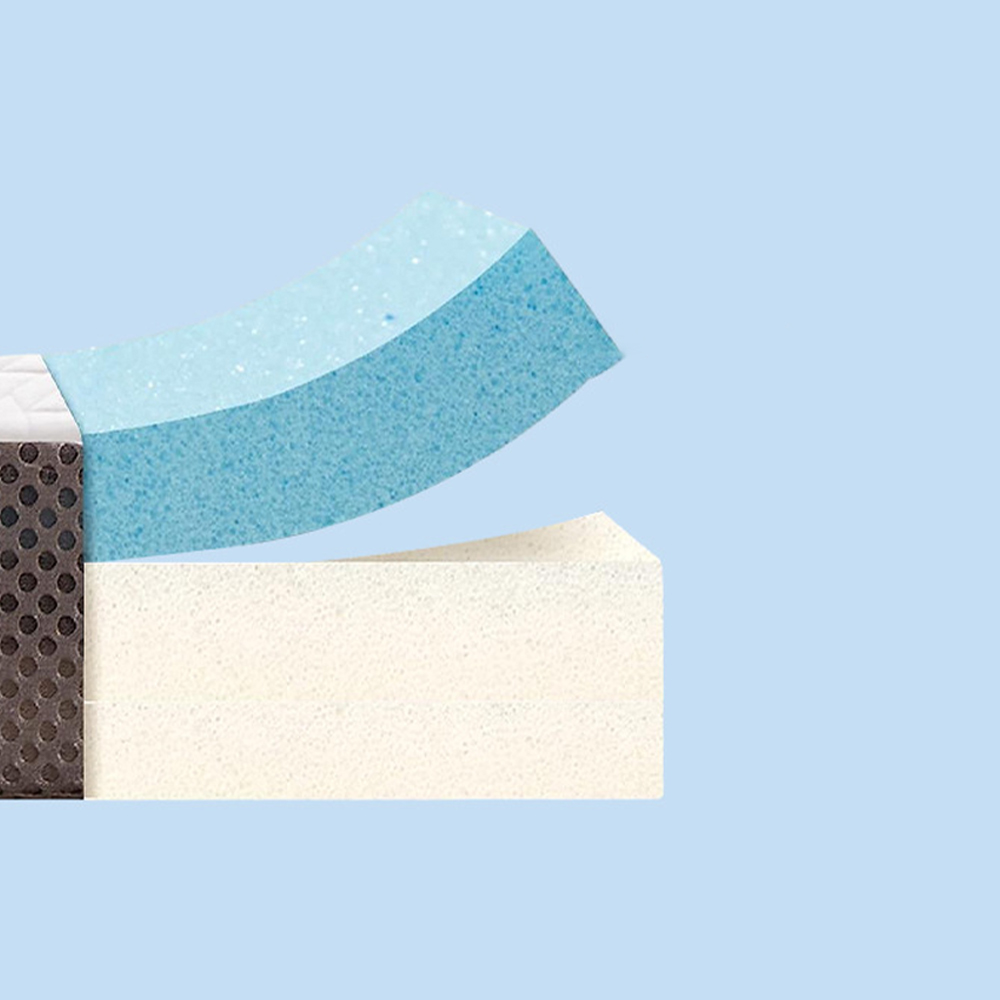 Three-Fold Memory Foam Gel Mattress for Floor UseA practical folding mat with gel layer for heat relief and easy storage. Suitable for floor sleeping when ventilation and portability matter.View Product →
Warning Concrete floors are porous. Even when the surface feels dry, moisture can wick upward into a mattress left directly on it for weeks. Place a wooden platform or ventilated spacer between the mattress and concrete, and inspect the underside once a month.
What to Use Instead of Slats: Foundations That Work
If the floor does not appeal, these foundations will support a memory foam mattress correctly. They differ in cost, airflow, and how readily manufacturers accept them under warranty.
| Foundation | Support | Airflow | Cost | Warranty fit |
|---|---|---|---|---|
| Solid platform bed | Excellent, continuous deck | Moderate | Medium | Usually approved |
| Bunkie board over frame | Good, firm panel | Low | Low | Usually approved |
| Non-coiled box foundation | Good, solid deck | Low | Low | Approved when specified |
| Old wire-coil box spring | Poor, uneven surface | Moderate | Already owned | Often rejected |
| Level floor / concrete slab | Excellent support, moisture risk | None | Free | Check care sheet |
A solid platform bed is the most direct replacement. Look for a continuous wooden top or a closely spaced slat deck covered by a panel. It holds the mattress like a floor while keeping bed height comfortable and allowing a little air along the sides.
A bunkie board is a low-profile plywood panel that rests on a standard frame, converting an open frame into one solid plane. It is an inexpensive fix if your frame has bent, missing, or widely spaced slats.
For new purchases, zoned-density foam deserves attention. WELLCARE’s zoned support mattresses use a firmer block in the central third of the core, which carries more of the sleeper’s weight and makes the mattress far more forgiving on foundations that are not perfectly continuous.
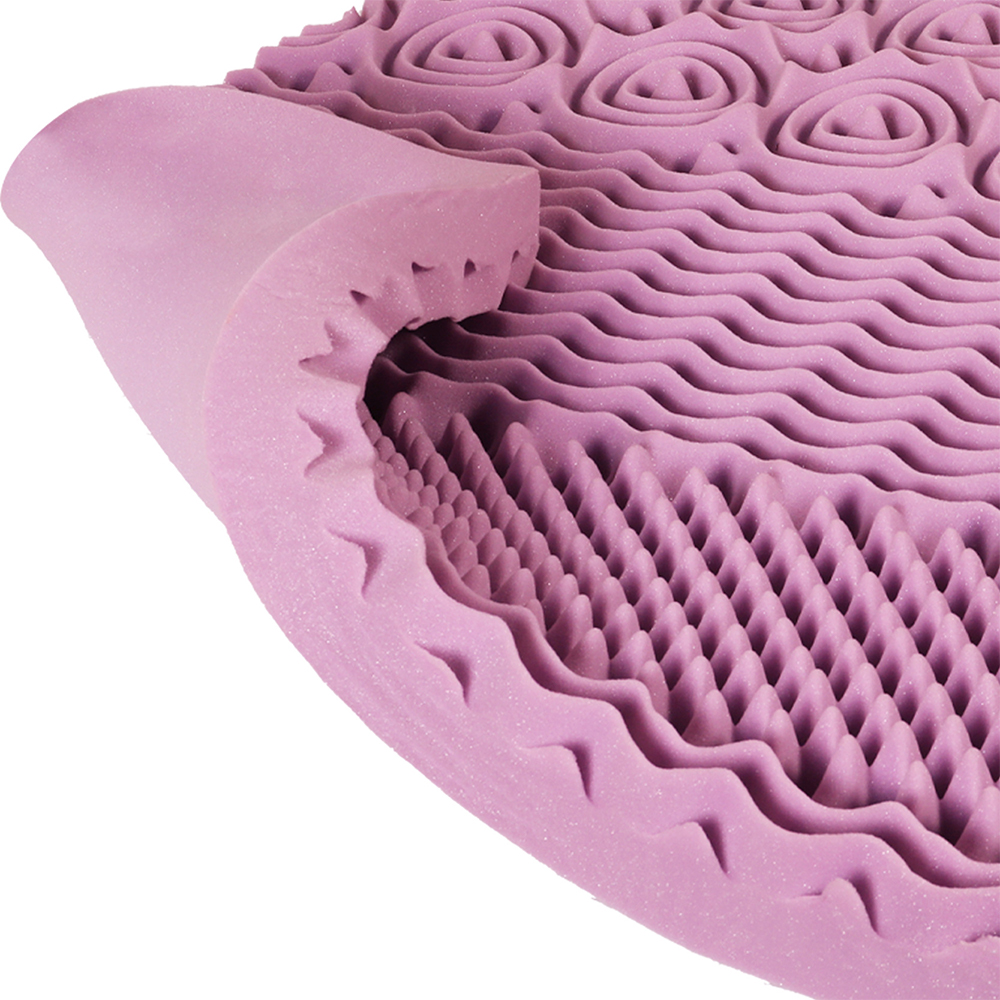 Zoned-Density Memory Foam Mattress with 7-Zone SupportFirmer central block helps the mattress cope with imperfect foundations. Ideal for those needing forgiving support on slatted frames.View Product →
Not recommended Never place a memory foam mattress on an old wire-coil box spring or on slats spaced more than 8 cm (about 3 in) apart. The foam base settles into the openings and develops permanent indentations within the first few months.
The rule to remember Any slat replacement must cover the entire footprint of the mattress and must not allow wide gaps between supports. Satisfy those two conditions, and the foam will last as long as it would on any purpose-built base.
Warranty Fine Print When the Base Isn’t Slatted
Warranty documents typically require a “proper foundation.” In practice, that means a firm, flat surface that supports the whole mattress and allows normal air circulation. A level floor can satisfy the support part, but a concrete slab often fails the moisture requirement.
Manufacturers write these conditions for a reason. The most common damage in returned mattresses is mildew across the bottom face and compression lines along gaps — both trace to the base, not a defect in the foam.
Three steps protect you if a claim ever arises:
- Keep the care sheet and purchase receipt together.
- Photograph the base setup during the first two weeks.
- Follow the foundation note on the care sheet; ask the manufacturer if you are unsure.
Because WELLCARE produces foam and finished mattresses in its own manufacturing facility, every care sheet can specify the exact foundation requirements for that model.
Six Setup Rules for a No-Slat Memory Foam Bed
Once the base is chosen, these six rules keep the mattress comfortable and even:
- Check level in both directions; shim frame legs if necessary.
- Support the full footprint. The deck, board, or mat must not be smaller than the mattress.
- Leave an air gap on at least two sides; tight placement against walls retains heat.
- Use a breathable, washable underlay under the mattress — never a plastic sheet.
- Rotate more often than on a slat base — a half-turn every two weeks evens pressure.
- Inspect the underside monthly for damp spots and air the mattress upright.
Good to know Memory foam is temperature-sensitive. Floors are usually a couple of degrees cooler than a raised bed, so a slat-free mattress can feel firmer for the first few minutes after you lie down. Body heat softens the upper layer within about ten minutes.
Bottom line: a memory foam mattress can absolutely be slept on without slats — on the floor, on a platform, or on a bunkie board — provided the base is level, supports the full footprint, and leaves moisture a way to escape. Satisfy those conditions, and the absence of slats will not shorten its life by a single night.
At WELLCARE, we design and produce memory foam mattresses for every kind of foundation, from platform beds to folding mats made for floor-level use. That is exactly why we can answer with confidence: the foundation matters, but it does not have to be slatted.
PREV:No previous article
NEXT:Can You Use a Bed Frame Only with a Memory Foam Mattress? Yes, Under 3 Conditions
NEXT:Can You Use a Bed Frame Only with a Memory Foam Mattress? Yes, Under 3 Conditions
Interested in cooperation or have questions?
Related News
WELLCARE was founded in 2003, boasting over a decade of profound and extensive experience.
Quick Links
Product
Media Centre
Contact Information
- wesley@wellcare-mattress.com
- +86-517-84998062
- +86-15152354988
- No. 168 Nenjiang Road, Huaiyin District, Huai'an City, Jiangsu Province, China
Copyright © Jiangsu Wellcare Household Articles Co., LTD. All Rights Reserved.
Custom Memory Gel Mattress Manufacturers
