

 English
 日本語
 Español



Industry News

Home / Media Centre / Industry News / Can You Use a Bed Frame Only with a Memory Foam Mattress? Yes, Under 3 Conditions
Product Category
NEW Category
Contact us
Can You Use a Bed Frame Only with a Memory Foam Mattress? Yes, Under 3 Conditions
Sleep Foundations — The Frame-Only Question
A Bed Frame Alone Can Support a Memory Foam Mattress — With Three Conditions
The short answer is yes. The useful answer is yes, if the frame stays flat, slat gaps stay under three inches, and nothing flexes under load. Here is how to check all three before you decide.
You unboxed a memory foam mattress this morning. The frame in your bedroom is a basic platform model — metal rails, wooden slats, and nothing else. No box spring, no bunkie board, no foundation layer. Is that enough to support an eighty-pound viscoelastic slab for the next eight years?
As a foam manufacturer producing memory foam for export markets since 2003, we have tested this configuration more times than we can count. The direct answer is yes: a bed frame alone can support a memory foam mattress, provided three conditions hold — a flat support plane, slat gaps no wider than three inches, and a frame that does not flex when you move.
The Short Answer: Yes — With Three Built-In Conditions
Memory foam does not need a box spring. Box springs exist for innerspring mattresses, whose heavy coil units need a shock-absorbing foundation. Foam has no coils and no steel grid. Its requirement is simpler and stricter at the same time: an even, rigid surface with enough airflow beneath to keep the foam ventilated. A well-built frame delivers exactly that.
A box spring is a legacy product. For memory foam, the frame is not a compromise — it is the most direct support structure the material can use.
What a Bed Frame Actually Does for Memory Foam
Memory foam is viscoelastic: under body heat it softens, conforms to your curves, and spreads pressure across a wider contact area. It is also heavy — premium foams run 2.5 to 5 pounds per cubic foot — and every pound depends on the surface below to stay flat.
A frame performs three jobs in a frame-only setup: it lifts the mattress for airflow, keeps the foam level, and stops it from sliding. Solid platforms and properly spaced slats handle all three. Our regular memory foam mattress line is built for exactly this arrangement — a dense base layer and a contoured comfort layer meant for direct placement on a frame or platform.
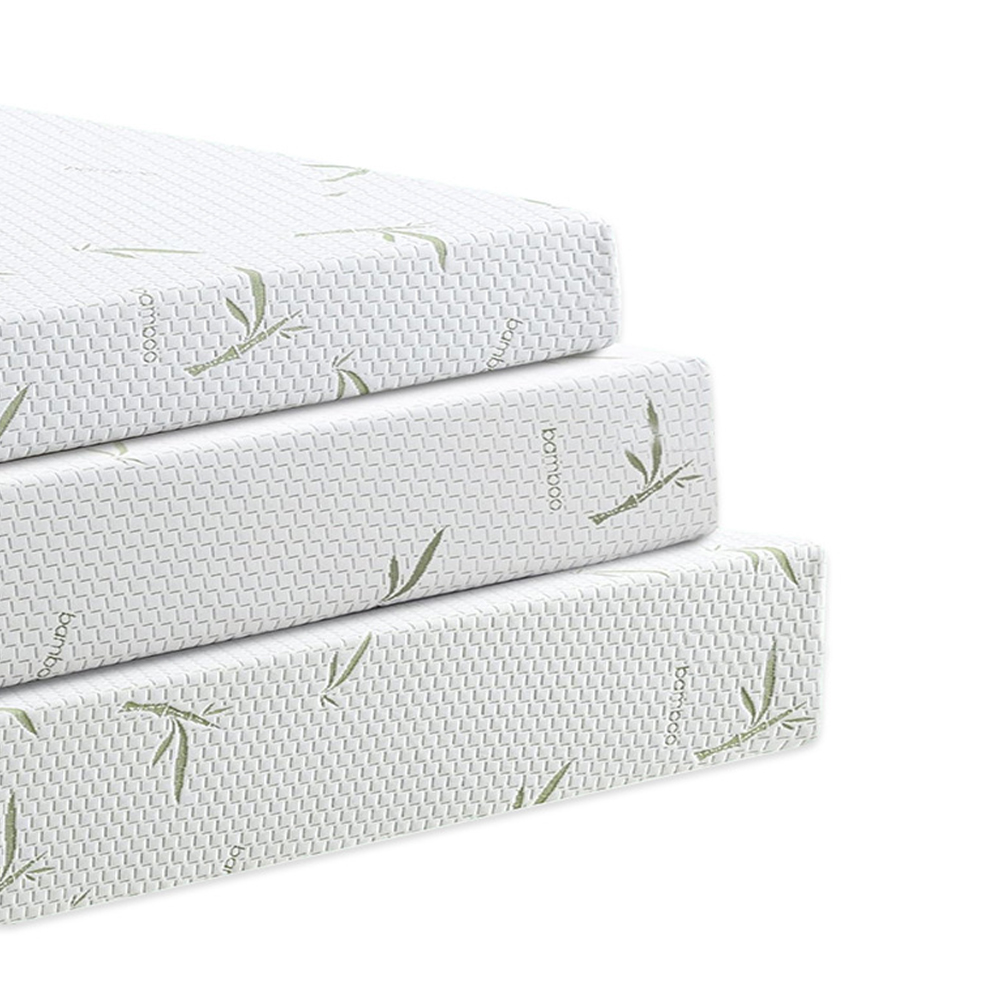 Wellcare Memory Foam Mattress for Direct Platform UseThis high-density memory foam mattress with bamboo print is built for solid frames, offering durable pressure relief and custom sizing to match your platform setup.View Product →
The trouble starts only when gaps appear in that level plane, which brings us to the measurement that matters more than any label on the frame.
The Number That Decides Everything: Three Inches
Foam under load deflects downward. When slat gaps exceed three inches (7.6 cm), the mattress pushes into each gap and forms parallel grooves on its underside. Within months those grooves become permanent compression lines — visible on the bottom, and felt on the sleeping surface as soft bands that follow the frame's slat pattern.
Every major mattress warranty includes a support-surface clause. Most cap the gap at three inches; stricter brands require 2.75 inches (7 cm). Slats should be solid wood or steel, at least 0.75 inch thick and 3 inches wide. We have a separate guide examining memory foam on slatted bases in more depth, including edge cases where frames fail.
Here is how common support surfaces compare when the mattress sits directly on the frame:
| Support surface | Typical gap | Compatibility | Main caveat |
|---|---|---|---|
| Wooden slatted platform | 2–3 in (5–7.6 cm) | Excellent | Verify spacing and center support |
| Solid platform or bunkie board | Zero (no gaps) | Excellent | Pair with a breathable barrier |
| Metal frame with wire grid | 4–6 in (10–15 cm) | Poor | Wires press grooves into foam |
| Legacy box-spring frame | Zigzag springs | Poor | Needs a bunkie board on top |
| Adjustable base | Solid deck | Excellent | Prefer flexible foam construction |
The pattern is consistent: flat, rigid, ventilated surfaces work; springy or widely spaced surfaces do not. If your frame sits at the borderline of the three-inch rule, a zoned foam structure gives extra insurance — firmer zones under the hips and lumbar area distribute weight more evenly and reduce localized deflection where slat edges meet foam.
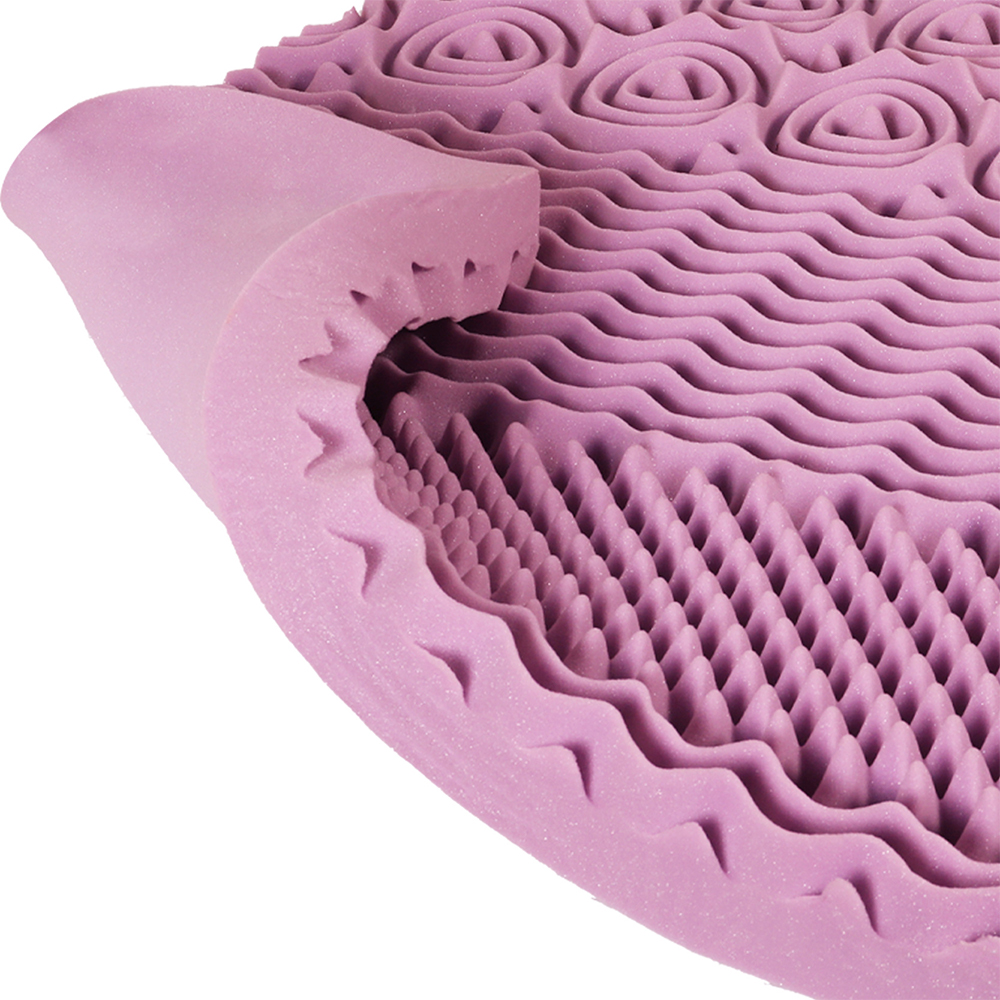 Zoned Memory Foam Mattress with Ergonomic Seven-Zone SupportDesigned for borderline slat gaps, this rollable foam mattress uses firmer zones under hips and lumbar to distribute weight evenly and reduce localized deflection.View Product →
Frame Types: What Actually Works With No Foundation
Not all bed frames behave alike. Here is how the four common types perform when they hold a memory foam mattress alone.
Metal Platform Frames
Metal platform frames come in two versions. The wire-grid type has thin steel beams spaced four to six inches apart; foam placed over that grid develops permanent track marks. The version with removable slats works, as long as the slats obey the three-inch rule.
Wooden Platform Beds
Wooden platforms are the most compatible frame type for memory foam. Most use two-to-three-inch gaps, which suits the foam's deflection behavior. On frames wider than a queen, confirm the center rail is solid — a fifth leg or steel channel prevents bowing under two sleepers.
Adjustable Bases
An adjustable base is the one powered frame where memory foam excels. The foam's flexibility lets it articulate cleanly when the head or foot section raises, and the base's solid deck provides the uniform support plane foam needs. Adjustable bases also eliminate slat gaps altogether.
Legacy Box-Spring Frames
If your frame is a metal rail with zigzag springs, designed to hold a removable box spring, it cannot serve as a platform alone. The springs press concentrated pressure into the foam and leave a waffle imprint. A thin bunkie board over the springs converts it into a functional base.
What Happens When the Support Surface Is Wrong
Foam failure builds gradually. In the first weeks, faint pressure lines form over each gap. By month four, the surface feels softer in those bands. By year two, sagging exceeds the 1.5-inch threshold most warranties allow — and the claim is denied because the foundation clause was violated.
If your frame's slat gaps exceed 3 inches (7.6 cm), placing a memory foam mattress directly on it will void most warranties and cause progressive, irreversible sagging in the foam core.
Edge breakdown is the second failure mode. Sitting on the side concentrates your full body weight on the outermost foam strip; without a perimeter support frame, that foam compresses laterally and loses rebound permanently. The third issue is heat: a solid platform with no airflow traps warmth beneath the mattress, accelerating the oxidation that turns foam yellow and brittle.
Perforated gel foam addresses that heat issue by channeling air through the core itself, which matters most on solid platforms with no slat ventilation.
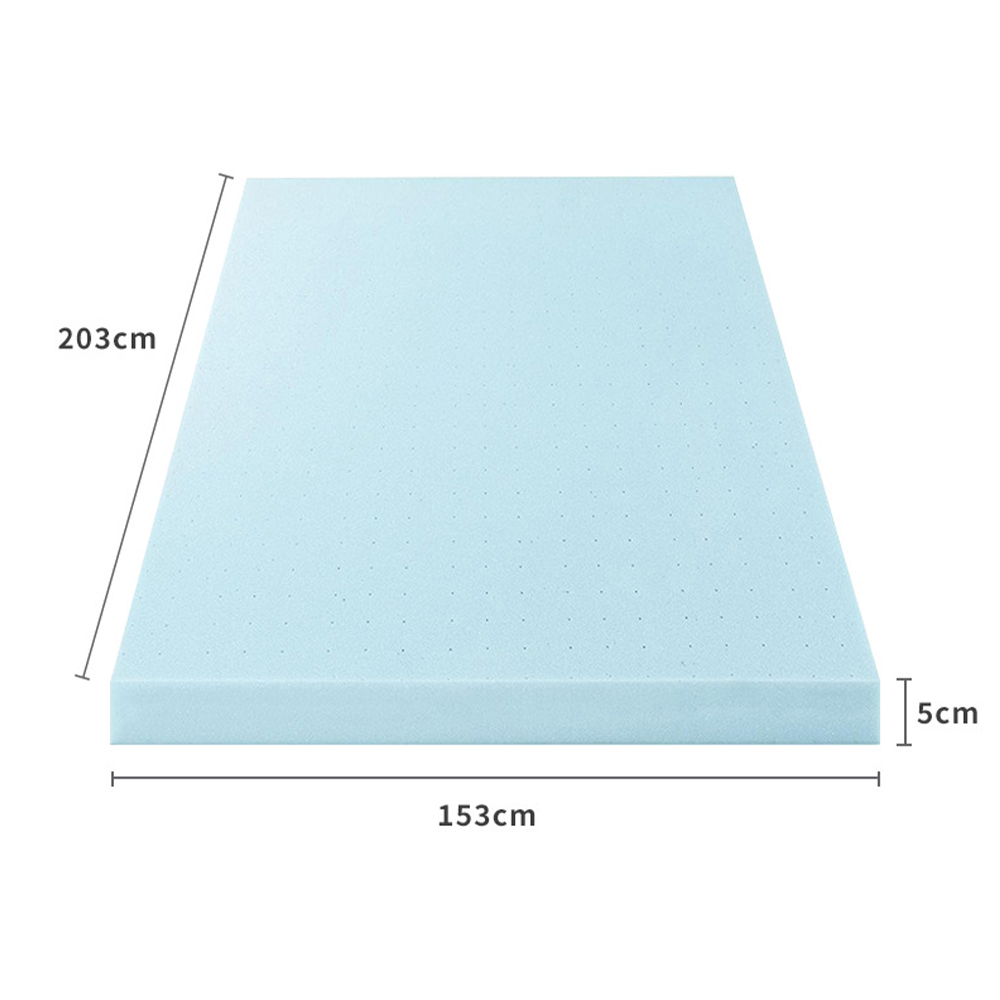 Perforated Gel-Infused Memory Foam Mattress for Solid PlatformsWith perforations channeling air through the core, this gel-infused mattress stays cool on non-ventilated bases, ideal for bulk or cross-border orders.View Product →
A Five-Point Checklist for a Frame-Only Setup
Before you skip the box spring, run through this sequence. It takes five minutes and answers the question with measurements instead of guesswork.
- Measure the gaps. A ruler is enough. Any gap between slats larger than three inches means you need a bunkie board or a different frame.
- Press each slat. Push down with your full hand strength. A slat that flexes under hand pressure will flex under a sleeping body.
- Test the center rail. On a queen or king frame, place a hand on the center and bounce gently. Deflection means the frame needs a center leg or a steel channel.
- Inspect after two weeks. Lift the mattress and look at the underside. Dark parallel lines are early warnings that slat gaps are too wide.
- Add a cotton barrier. A thin, breathable pad between mattress and slats protects the fabric from abrasion while keeping air moving.
Your frame qualifies if every slat gap is 3 inches or less, no slat flexes under hand pressure, and the center rail holds firm when you sit on the edge of the bed.
The Final Verdict on Frame-Only Memory Foam
Use the bed frame. Skip the box spring and the plywood. But check the numbers first. Memory foam's best partner is a flat, rigid, ventilated surface — and a properly built frame provides it. The frame is not a stopgap for a missing foundation; it is the correct foundation for foam.
Let the foam guide the decision: denser foam, at four pounds per cubic foot or higher, tolerates wider gaps and lasts longer; zoned foam reduces hip and shoulder pressure on any base. Measure the frame, match the foam, and nothing else needs to sit between them.
The three-inch rule comes from the mechanical limit of viscoelastic foam. A wider gap lets the foam sag under its own weight plus yours. Keep the gap narrower, and the frame does everything a foundation could do — without the extra cost.
PREV:Can You Sleep on a Memory Foam Mattress Without Slats? Yes — Here's How to Do It
NEXT:Can You Put a Memory Foam Mattress On a Box Spring? Support Rules Explained
NEXT:Can You Put a Memory Foam Mattress On a Box Spring? Support Rules Explained
Interested in cooperation or have questions?
Related News
WELLCARE was founded in 2003, boasting over a decade of profound and extensive experience.
Quick Links
Product
Media Centre
Contact Information
- wesley@wellcare-mattress.com
- +86-517-84998062
- +86-15152354988
- No. 168 Nenjiang Road, Huaiyin District, Huai'an City, Jiangsu Province, China
Copyright © Jiangsu Wellcare Household Articles Co., LTD. All Rights Reserved.
Custom Memory Gel Mattress Manufacturers
